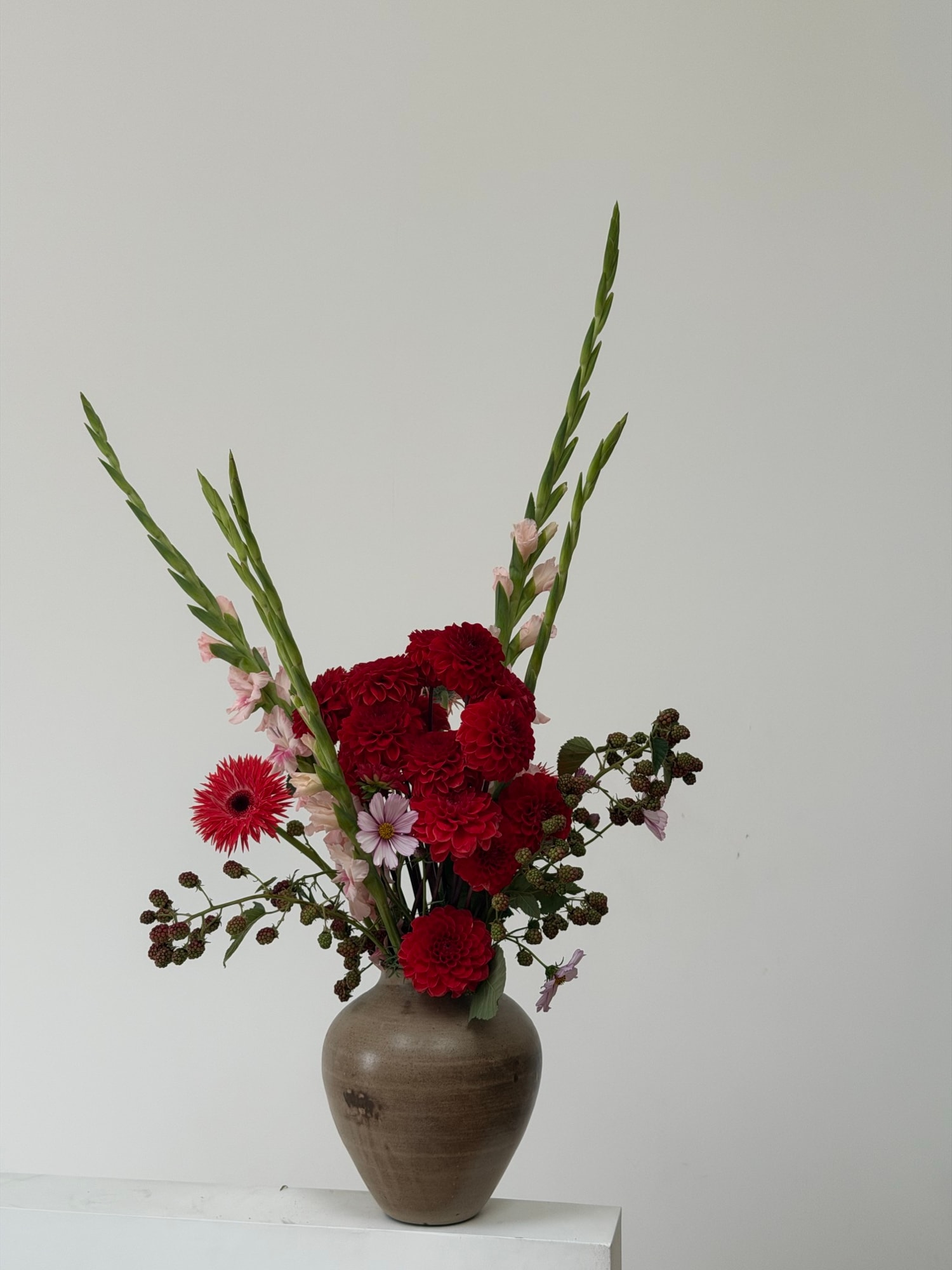
How to Choose Flowers for Every Room in Your Home
Dining tables need low sightlines, kitchen islands can take scale, hallways love a single bold gesture. Choose flowers for the room they will live in — not for a flat-lay.
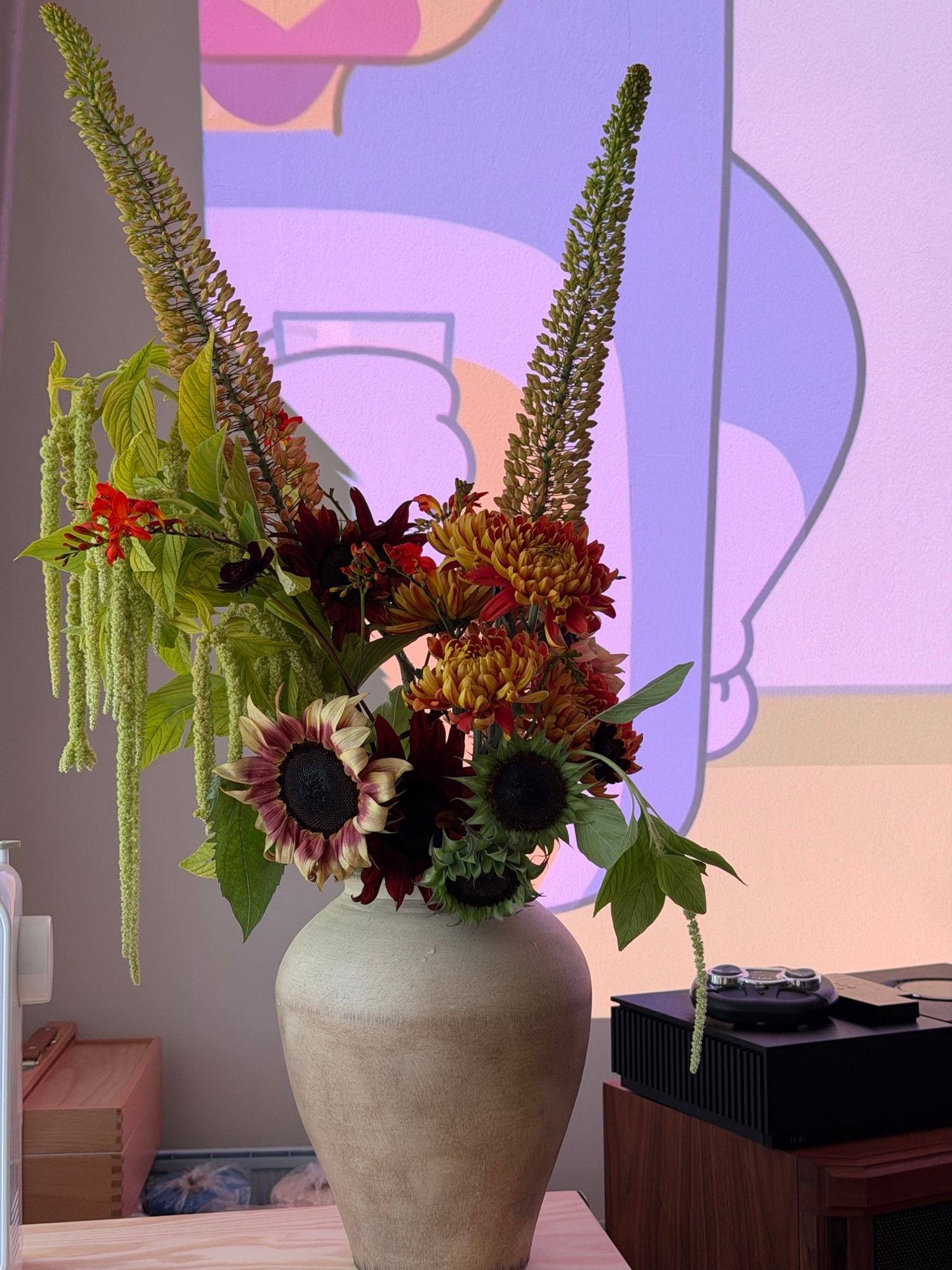
Choose flowers for the room, not for the photograph. Dining tables need low or open sightlines, kitchen islands can take height and movement, hallways love one clear gesture, and shelves want smaller, quieter pieces. The same stems can fail or sing depending on where they sit.
Dining table
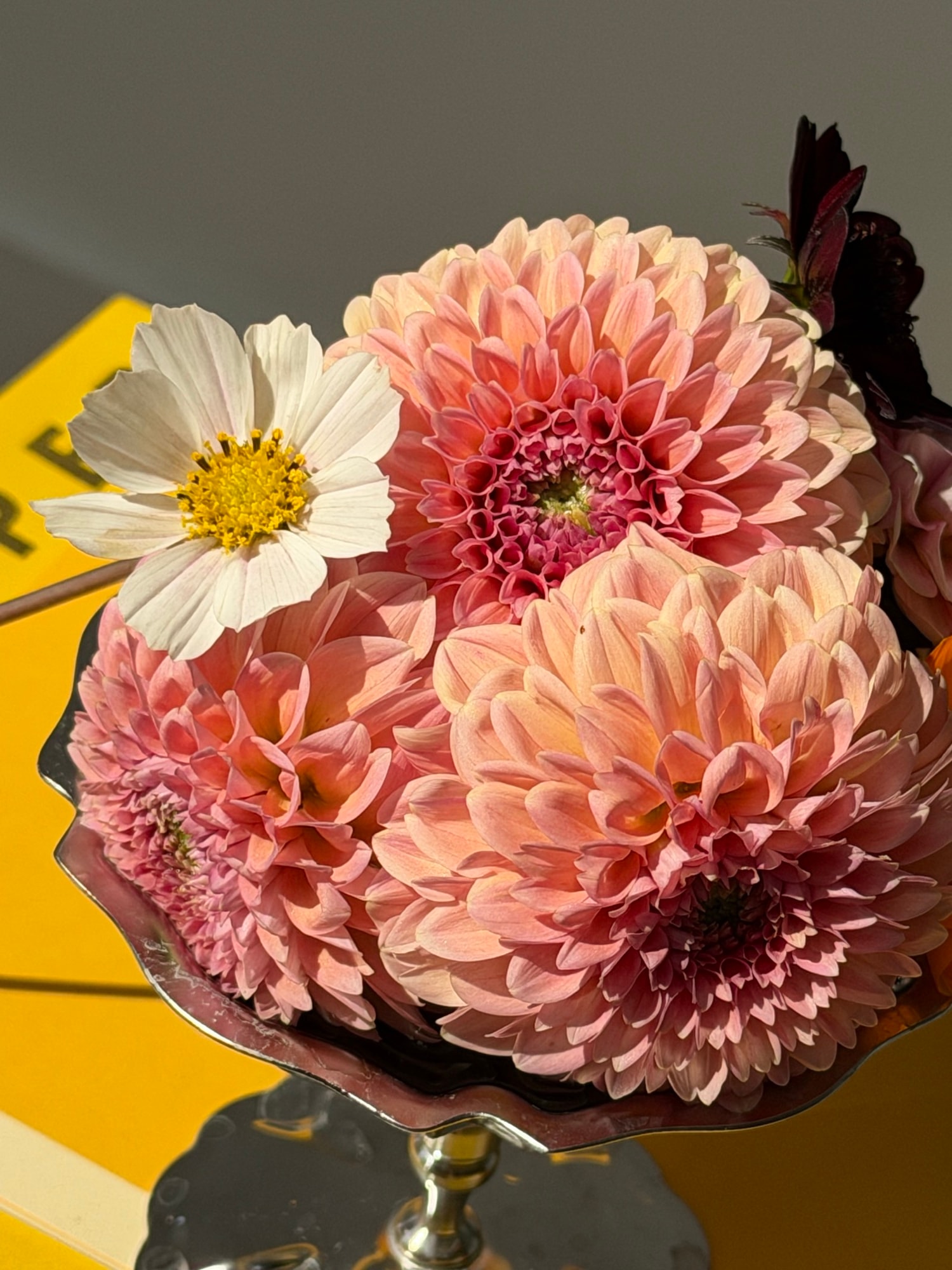
Guests still need to see each other. Keep the centre of the arrangement below eye level, or push height to the ends of a long table and leave the middle open. Soft, rounded forms — dahlias, smaller chrysanthemums — feel generous without blocking conversation.
For a weekday table I often prefer a lower bowl with a clear silhouette. For dinner, a little more theatre is fine if people can still lean in.
Kitchen island
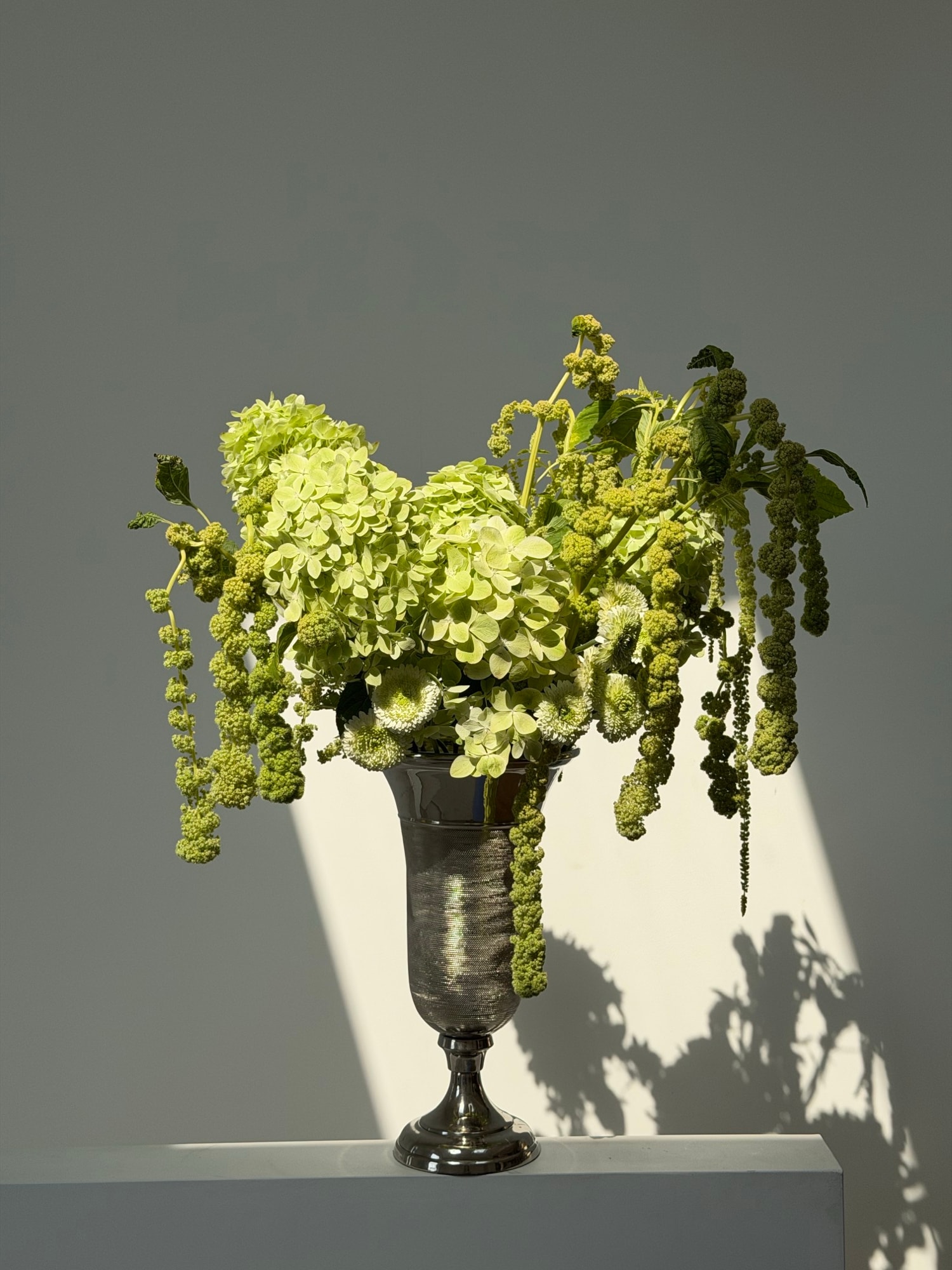
Islands can hold scale. People walk around them, so the arrangement can be taller and more sculptural — trailing amaranthus, long gladiolus, a strong centre of hydrangea — without interrupting a meal. Leave a clear landing strip for chopping boards and coffee cups.
If the island faces a living space, consider the view from the sofa as well as from the sink. One dramatic piece often looks better than three small ones competing for attention.
Hallway and entrance
Hallways are brief encounters. A console wants something with a clear outline — a few tall stems, a dark calla, an asymmetric line — so the flowers register as you pass. Avoid wide arrangements that catch bags and coats.
If the light is low, lean on form and contrast rather than pale, delicate faces that disappear against the wall.

Living room and shelves
Living rooms can take a generous floor or side-table piece. Shelves and windowsills need restraint — one stem family, or a small vessel that does not fight the books and objects around it. Negative space is part of the arrangement.
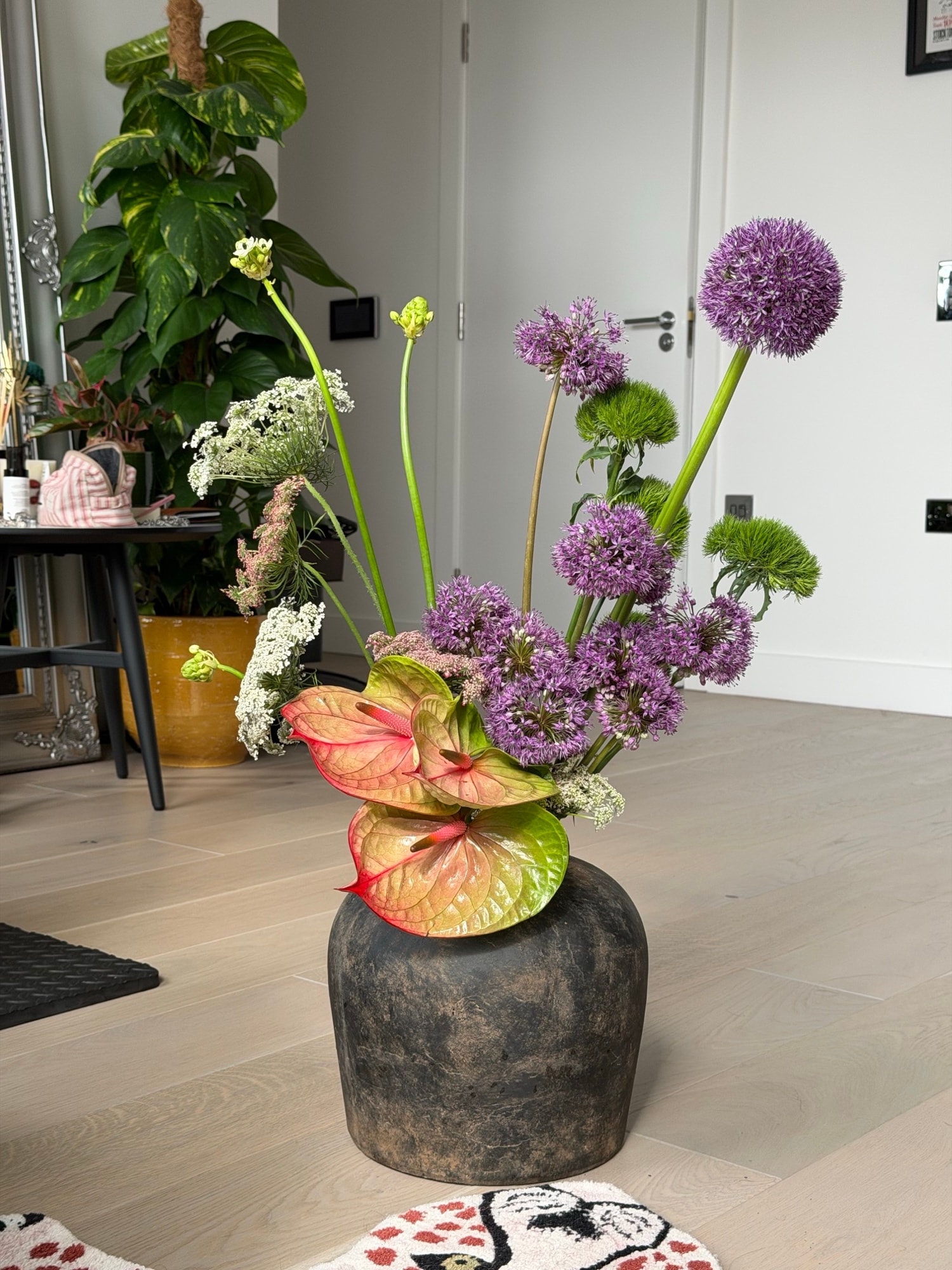

How a florist decides
When I look at a room, I ask: where will people stand, sit and walk? What vase already lives there? How much colour can the walls take? Then I choose stems that answer those questions, rather than repeating a formula from Instagram.
That is also the point of a regular flower service. Once we know the kitchen island, the hallway console and the vase you actually use, each delivery can be made for those places — not for a generic “home” in the abstract.
Want flowers selected for the rooms they will live in? Tell us about your home and we will agree a personal quote for West or North West London delivery.